
Research Projects
Below are my core research directions. I also collaborate on projects broadly associated with cognition and data visualization. You can find more details on our lab webpage.
Improving Decisions Using Visualizations of Uncertainty
While effectively communicating uncertainty is challenging, my collaborators and I have developed and tested several cognitively optimized visualization techniques, including forecasts of hurricanes and COVID-19 mortality prediction. These techniques capitalize on human decision-making capabilities and advances in uncertainty communication to help the public make more informed decisions during hazardous events.
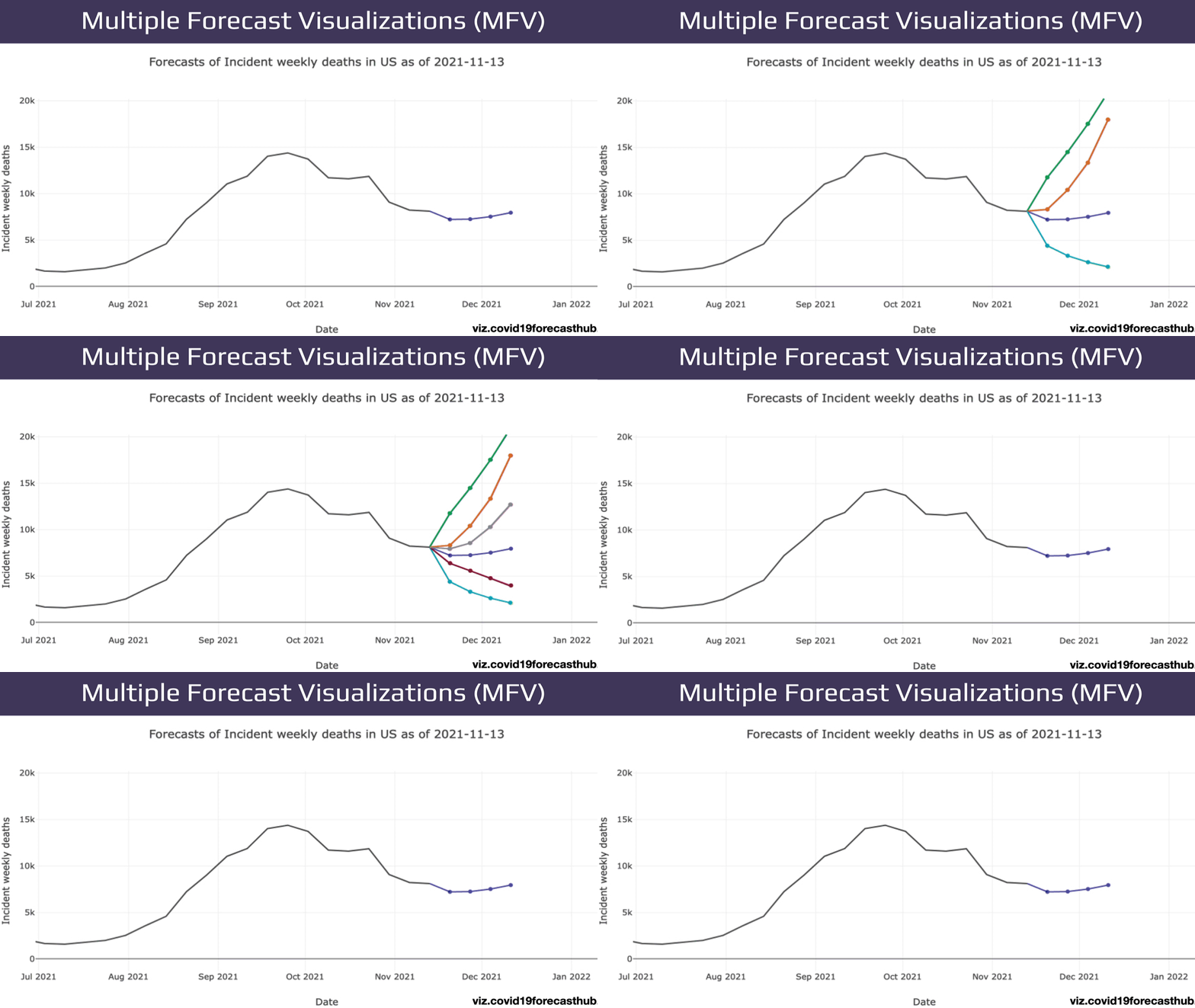
A multiple forecast visualizations (MFVs), is a type of chart where uncertainty is encoded implicitly through the disagreement (or lack thereof) of multiple forecasts plotted in the same space, which informs readers about the range, shape, and concentration of predictions. We have examined MFVs in the context of COVID-19 forecast visualizations.
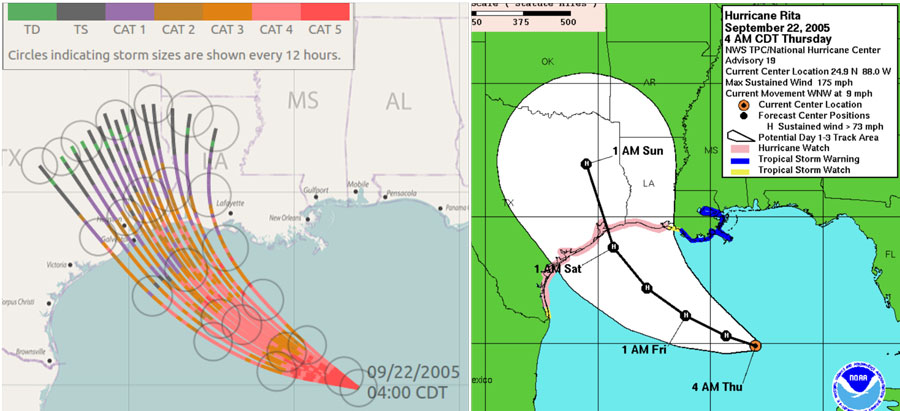
We have extensively examined is the Cone of Uncertainty produced by the National Hurricane Center, finding that people see the boundaries of the cone as encompassing a categorical danger zone, leading them to incorrectly think that areas outside the boundary are safe, whereas areas within the boundary are uniformly high risk. People also incorrectly think the cone shows the storm growing in size. The ensemble forecast on the left reduces these biases.
Visualization Decision-Making and Perception Theory
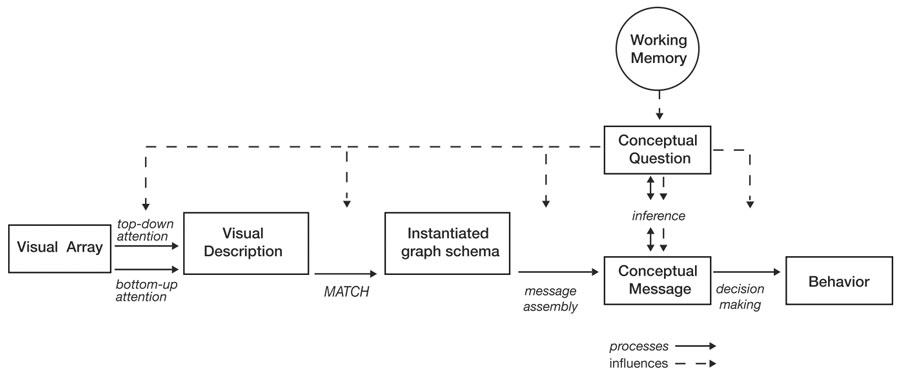
I developed the only modern decision-making model with visualizations that integrate current theories in visualization, cognitive, and decision-making sciences. This framework provides communicators with a grounding theory to address visualization-reasoning errors and develop new visualization techniques.